
Breast Cancer Initiative Aims to Close Gaps in Care
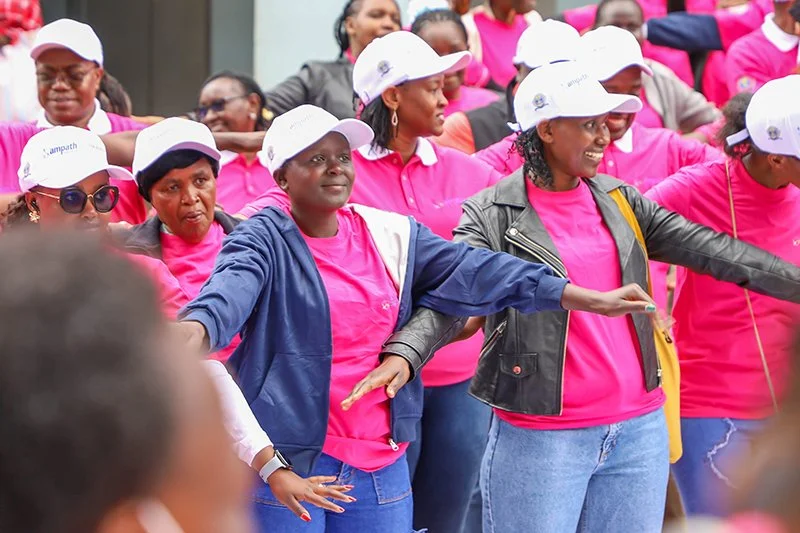
Sharon (center) with other breast cancer champions at the recent awareness walk
Sharon is a 28-year-old mother of two whose journey to a breast cancer diagnosis was marked by delays, uncertainty and pain. Sharon first sought medical attention after noticing a lump in her breast, but was turned away three times and reassured that it would go away. By the time she eventually received the correct diagnosis, six years later, the cancer had advanced and spread to other parts of her body, reaching an advanced stage (4). What followed was a difficult journey through chemotherapy, fear and uncertainty, until she found strength and support through the AMPATH IMARA Breast Cancer Survivors Fellowship, where she connected with other women who understood what she was going through.
Hear more from Sharon
Sharon’s experience is deeply personal, but the gaps reflected in her story are much bigger than one patient.
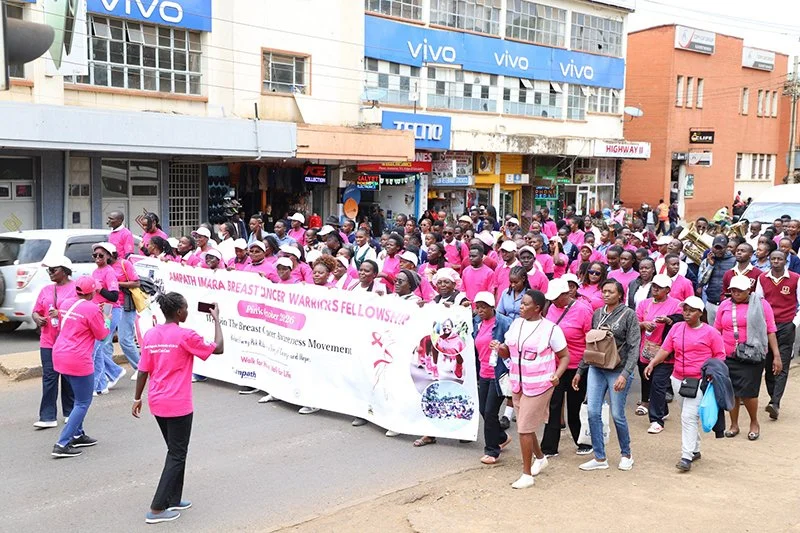
Across Kenya, many women continue to face barriers at different points along the breast cancer care journey. Some may not recognise early warning signs or know where to seek help. Others encounter misconceptions and fear, while delays in seeking care, accessing diagnostic services, receiving results or being linked to appropriate treatment can allow the disease to progress. By the time many women reach specialised care, their cancer is already advanced.
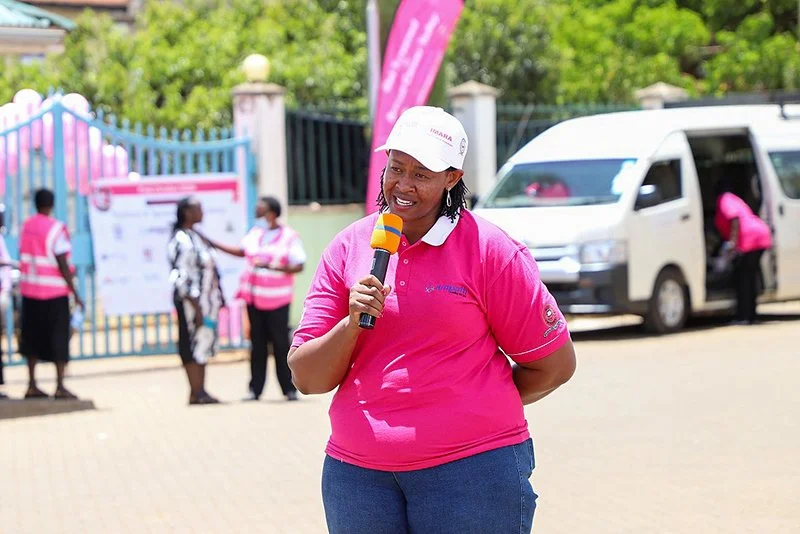
Dr. Loice Sitienei
“Breast cancer is currently the most commonly diagnosed cancer among women in Kenya and the second leading cause of cancer-related deaths. The burden is compounded by the fact that more than 70 per cent of women diagnosed with breast cancer in Kenya present with stage 3 or 4 disease,” said Dr. Loice Sitienei, breast radiologist at Moi Teaching and Referral Hospital and co-principal investigator. “For many patients, the difference between finding a lump and receiving the right care is not simply a matter of time. It is a series of gaps that can emerge at different points along the care pathway,” she added.
It is this continuum of gaps that the Integrated Model for Access, Retention and Advanced Breast Cancer Care (IMARA-BC) seeks to address.
Recognising the need to strengthen breast cancer care beyond individual interventions, The Pfizer Foundation is supporting a $6 million grant to expand access to timely breast cancer diagnosis, treatment and care in Kenya.
The grant is part of The Pfizer Foundation's Action & Impact: A Cancer Care Initiative, an effort to reduce persistent disparities in breast cancer outcomes between high-income countries and low- and middle-income countries.
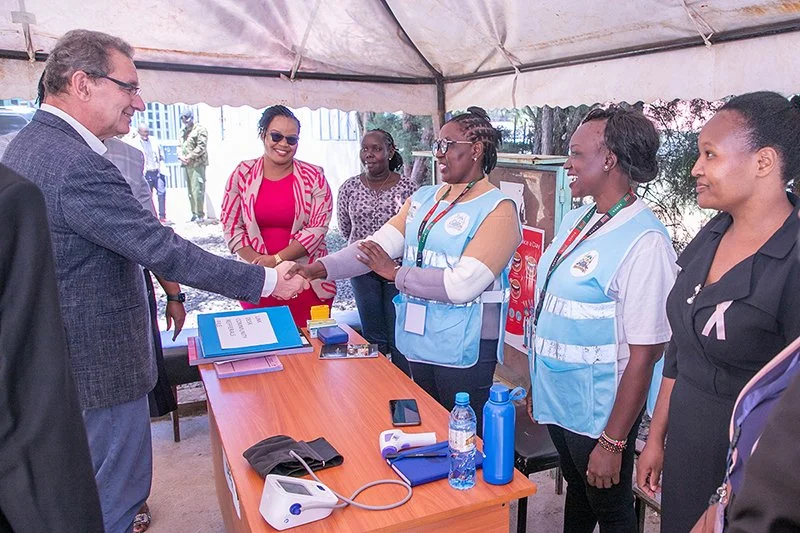
Dr. Bourla meeting community health workers
Through AMPATH Kenya, the investment is supporting a three-year effort to strengthen the breast cancer care continuum, from community awareness and early detection through diagnosis, treatment and survivorship. In September, members of the Pfizer team had an opportunity to see that continuum in action.
During a visit to Kenya, Pfizer Chairman and CEO Dr. Albert Bourla and members of the Pfizer Executive team spent time with the people at the heart of this work, from community health workers and healthcare leaders to breast cancer patients and survivors.
In Kapsoya, Uasin Gishu County, the team visited a community health worker (CHW) training session and learned more about the role CHWs play in bringing breast health information closer to communities. Equipped with the knowledge to recognise potential warning signs, encourage early care seeking and connect people to health services, CHWs are an important link between communities and the formal health system.
The team also heard directly from women whose lives have been shaped by breast cancer, including Sharon, whose story brought into focus the very gaps that IMARA-BC is working to address. “Listening to Sharon speak about the support she found among fellow survivors reflects an important part of IMARA-BC,” said Dr. Jeremiah Laktabai, senior lecturer at Moi University and co-principal investigator. “Improving breast cancer outcomes is not only about what happens when a patient reaches a cancer treatment centre. It is also about what happens before that point, and what support surrounds a patient throughout the journey.”
The Pfizer team saw another part of that journey during a tour of the MTRH Chandaria Cancer and Chronic Diseases Centre, where they gained insight into the specialised services supporting patients through diagnosis and treatment at Moi Teaching and Referral Hospital.
Together, the community visit and the tour of the cancer centre offered a view of the continuum that IMARA-BC is working to strengthen: bringing breast health information closer to communities, supporting earlier detection, improving the pathway to diagnosis, strengthening access to treatment and ensuring that patients receive the navigation and support they need to remain in care. The visit provided an opportunity to see these efforts not simply as programme activities, but through the experiences of the people they are intended to serve.