From Insight to Action: Building a Research Translation and Health Policy Core at AMPATH
The impact of AMPATH research will be strengthened through the development of a Research Translation and Health Policy Core that will help investigators better connect their work to policy and practice.
Research translation involves transforming research findings into actionable insights that inform health policy and improve health service delivery.
The initiative builds on existing policy development work that AMPATH has been engaged with in partnership with the Ministry of Health, as well as findings from a comprehensive needs assessment, and responds to requests from AMPATH investigators for greater partnership support in this area.
The needs assessment included 58 survey responses from AMPATH investigators and 57 interviews with stakeholders at local, county and national levels. Investigators and stakeholders pointed to the need for more engagement with health policy processes, better understanding of policy priorities, and stronger mechanisms to link researchers with policymakers. Respondents also identified a demand for skills in media engagement, monitoring and evaluation, workshops, and mentorship as priority areas for development.
“This is important work to set up at AMPATH,” said Dr. Faith Yego, AMPATH co-chair for Research Translation & Health Policy. “The idea of translating research for use by policymakers is a novel one for many investigators. Many lack training and connections in this area, but it’s an exciting opportunity to focus our efforts.”
The core will support researchers in ensuring their work is policy-relevant, accessible and actionable. Core functions are expected to include proposal and research output review, grant writing support, consulting on projects and capacity building. In addition, the core aims to position AMPATH as a facilitator between investigators and government decision-makers.
“The core has been much needed for years,” said Christopher Rice, AMPATH co-lead for Research Translation & Health Policy. “This idea responds to years of strategic planning at AMPATH and is even more pressing considering the current funding climate.”
A central objective of the core’s design is to further enhance the alignment of AMPATH research with both county and national government priorities. By appealing to what policymakers and health systems actually need, AMPATH hopes to ensure that its evidence generation is more directly usable and impactful. The core is also being structured with sustainability in mind by incorporating strategies for long-term funding, training, and institutionalization within the Research Program Office.
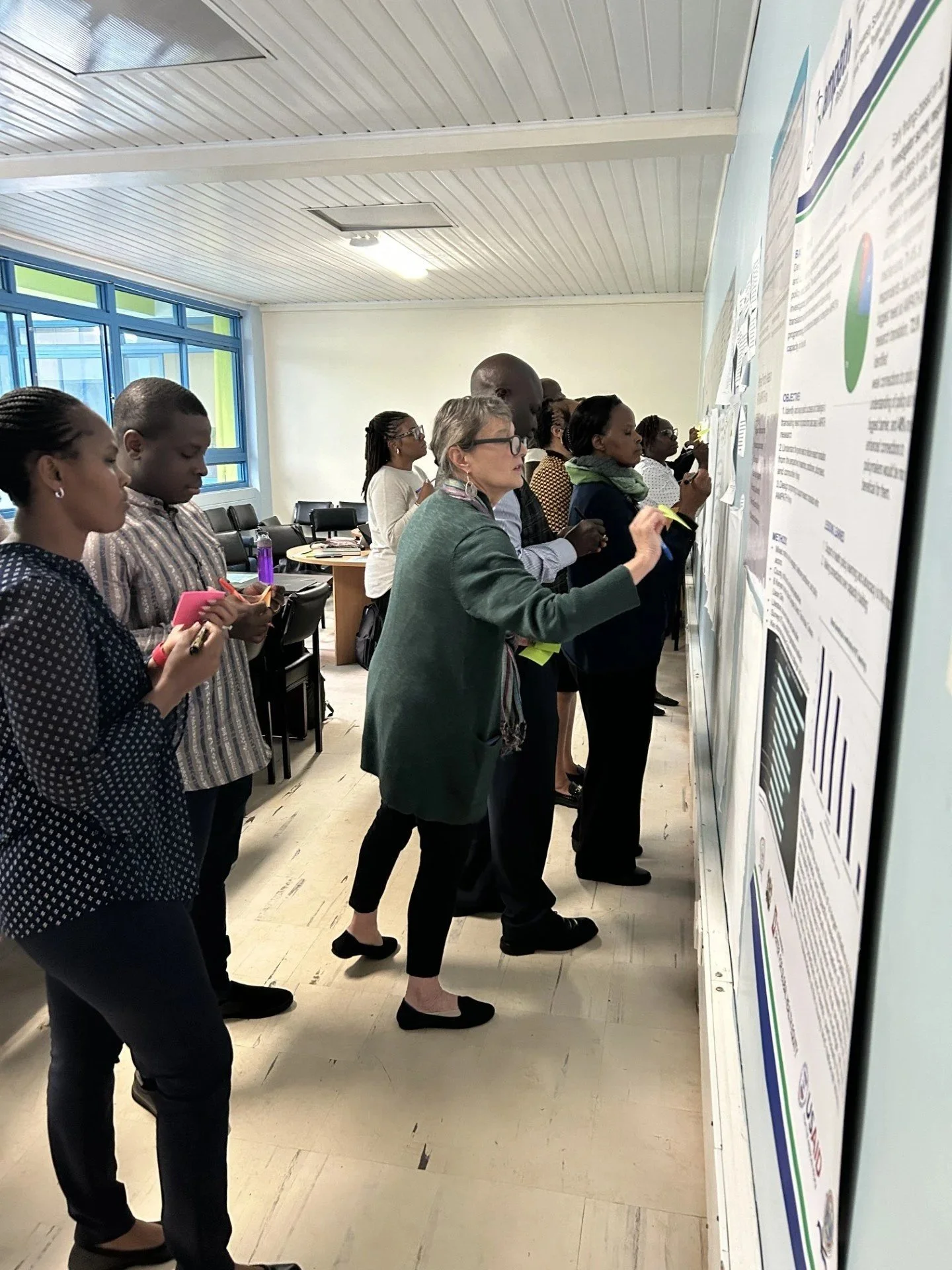
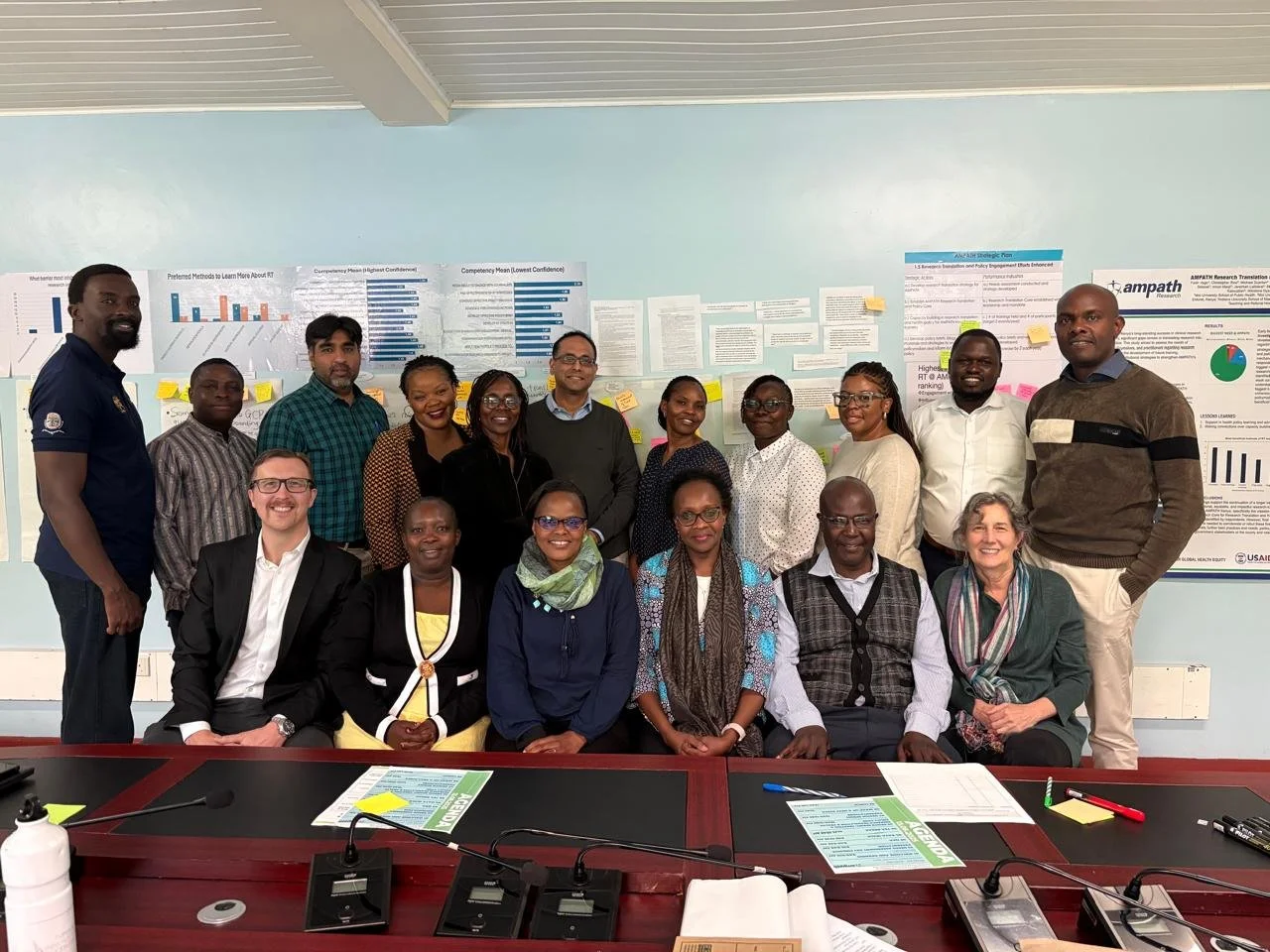
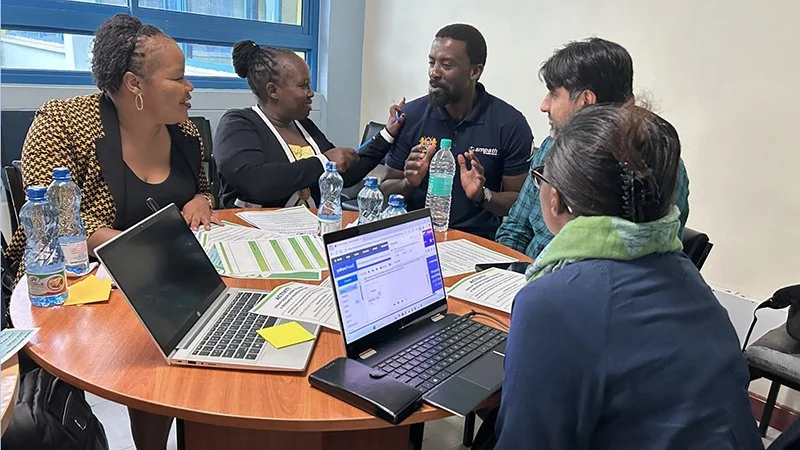
One of the initial steps in shaping the core occurred in August when 20 AMPATH investigators, staff and study coordinators gathered in Eldoret to review the needs assessment findings and begin co-designing the core. Participants engaged in a “data walk” to interpret the assessment results and identify pressing gaps, followed by a small group design sprint to envision how the core should function.
These discussions generated practical ideas ranging from structured proposal and output review processes to targeted engagement with county and national governments and underscored the importance of mentorship, workshops and media skills. The meeting also reinforced the core’s dual role to support individual investigators in strengthening their policy engagement and to provide greater institutional structure to AMPATH’s response to government needs.
While still in development, the core represents an important institutional innovation for AMPATH. Beyond supporting individual investigators, it will create a stronger system for translating research into practice—meeting the needs of policymakers, strengthening health systems and ultimately improving patient care. Future steps will include refining the core’s design based on additional input from government and healthcare institutions, with the aim of formally launching its services in the near future.
By bridging the gap between research and policy, AMPATH’s Research Translation and Health Policy Core promises to move insight into action, ensuring that the partnership’s robust research enterprise delivers tangible benefits for the health of communities in Kenya and beyond.