
AMPATH Partnership Stays Strong as Funding and Programs Evolve
Over the past year, the global landscape for health funding has changed significantly leading to increased uncertainty and greater challenges in supporting the AMPATH Kenya partnership, which has hosted substantial innovations and has had an unyielding commitment to patients over nearly four decades. Despite this, AMPATH Kenya continues its commitment and forward momentum.
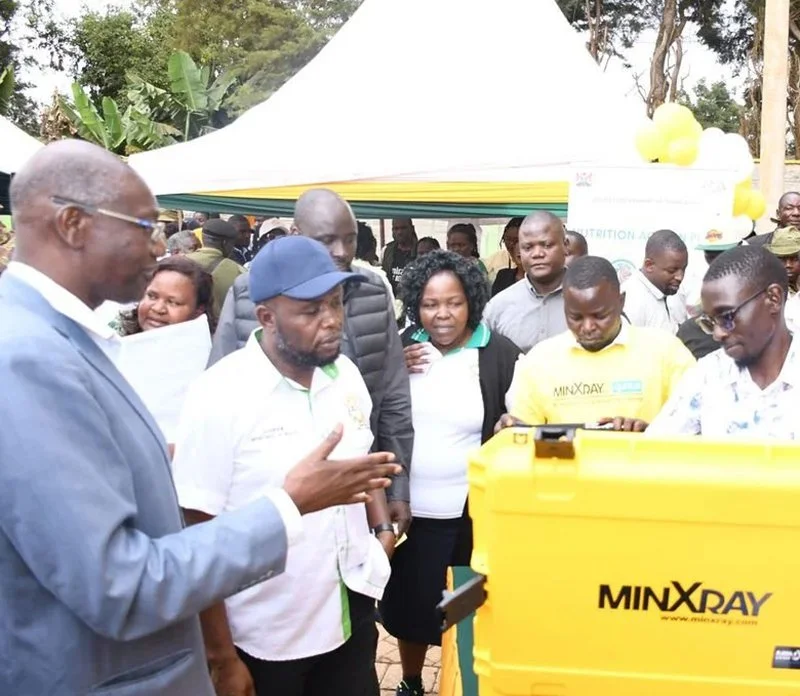
AMPATH Uzima, through the support of the United States Government, facilitated the procurement of AI-powered digital X-ray machines with advanced image interpretation capabilities for county partners.
Donors to the AMPATH emergency fund provided nearly $1 million to overcome the most critical periods, fill program gaps and build for a sustainable future. “We could not be more thankful for our AMPATH family who answered the call when we really didn’t know how we were going to continue to provide care for some of our most vulnerable patients,” said Dr. Adrian Gardner, executive director of the AMPATH Consortium. “When combined with amazing dedication from Kenyan clinicians and staff who continued to prioritize patient needs, this tells a heroic story of partnership and resilience.”
That resilience is evident in AMPATH’s continued leadership in HIV care, which has been a foundational part of the partnership, and which is increasingly part of a broader, integrated approach to health. AMPATH partners are leading national efforts in Kenya to integrate HIV services with care for noncommunicable diseases and primary care across the country. Integration means a patient can receive comprehensive care in one location which reduces stigma, improves efficiency and expands access.
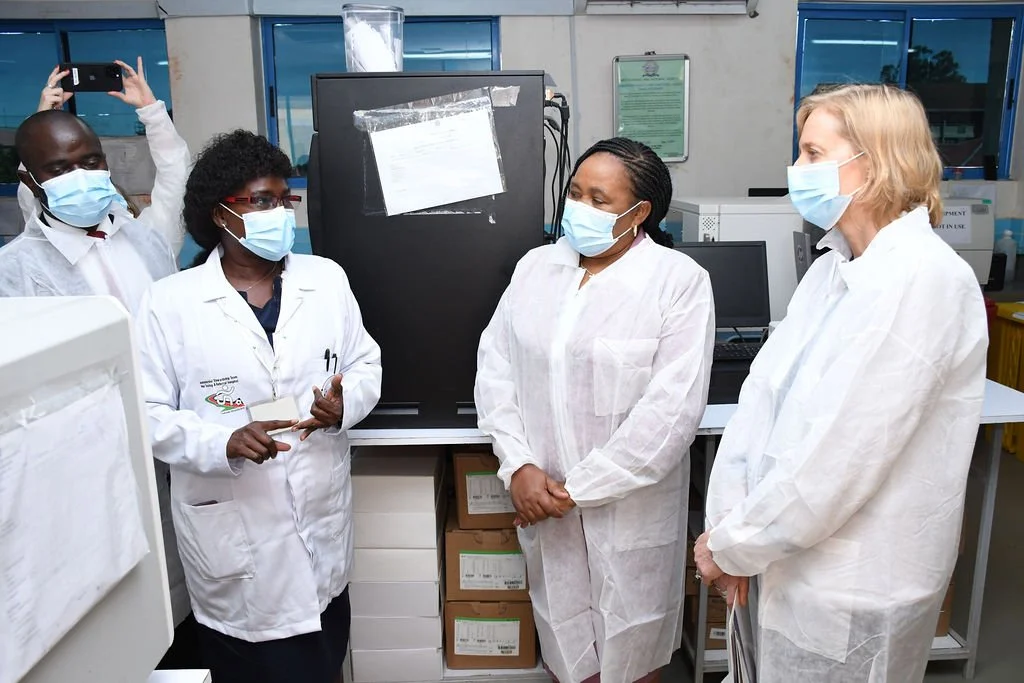
AMPATH Kenya and Moi Teaching Referral Hospital were honored to host the Chargé d’Affaires from the U.S. Embassy in Kenya.
One of our three former USAID PEPFAR supported programs, AMPATH Uzima’s HIV care program, recently received notice that they are one of four Kenyan partners that are likely to receive two additional years of funding (September 2026-2028) for HIV care from the United States Government through the State Department. This will include expansion of geographic coverage to the counties currently supported by AMPATH Dumisha Afya as well as the potential for expansion of the scope of work to other high priority areas such as TB, malaria, and global health security. “We are proud to continue to serve people and communities in western Kenya as we continue to work with our county partners to transition these vital services,” said Professor Sylvester Kimaiyo, AMPATH Director of Care.
This renewed support is an important and encouraging development for patients and communities who rely on AMPATH’s HIV services. At the same time, the funding does not restore all previously supported programs. Services such as support for orphans and vulnerable children, health education, and some prevention activities will no longer be included. Even with these ongoing challenges, the continuation of core HIV care represents meaningful progress and the strength of AMPATH's model.
As AMPATH adapts to this changing funding landscape, philanthropic support remains essential in helping sustain vulnerable patients and preserve programs that fall outside government funding priorities.
“It is a joy to see this dream become a reality for Kenyan families. These parents and caregivers want the same thing as any parent—a healthy, happy and productive future for their children.”
AMPATH supporters celebrated the groundbreaking for the MTRH Wezesha Watoto Children’s Neurodevelopment Centre in November. Kenya’s first-of-its-kind center will provide comprehensive care, education and support for children with neurodevelopmental conditions and their families. Services will include early screening and diagnosis, speech and occupational therapy, behavioral and educational support, caregiver and teacher training and family counseling.
AMPATH’s expansion of point-of-care ultrasound, or POCUS, also demonstrated how technology can transform frontline care. By training clinicians across multiple sites to use portable ultrasound at the bedside, AMPATH is enabling faster, more accurate diagnosis in settings where advanced imaging is often unavailable. Providers can detect conditions such as heart disease, pregnancy complications, and breast abnormalities earlier which speeds referrals and treatment.
Other research and training activities also persevered. In July, more than 130 researchers and trainees gathered for a major symposium to chart the next phase of scientific discovery and implementation. A new Research Translation and Health Policy core will aid investigators in sharing and implementing research findings. AMPATH’s bi-directional student and resident educational exchange also continued to grow with AMPATH Nepal and Ghana expanding opportunities to both send and host trainees.
"We are forging a strategic path forward for research, celebrating the partnerships that make that happen and reviewing what we need to maintain or innovate for purposes of sustainability." said Professor Winstone Nyandiko, AMPATH’s executive director of research. AMPATH’s research program, which has already generated more than 1,400 publications and influenced policy across Kenya, is focused on diversifying funding and strengthening local leadership to withstand global volatility.
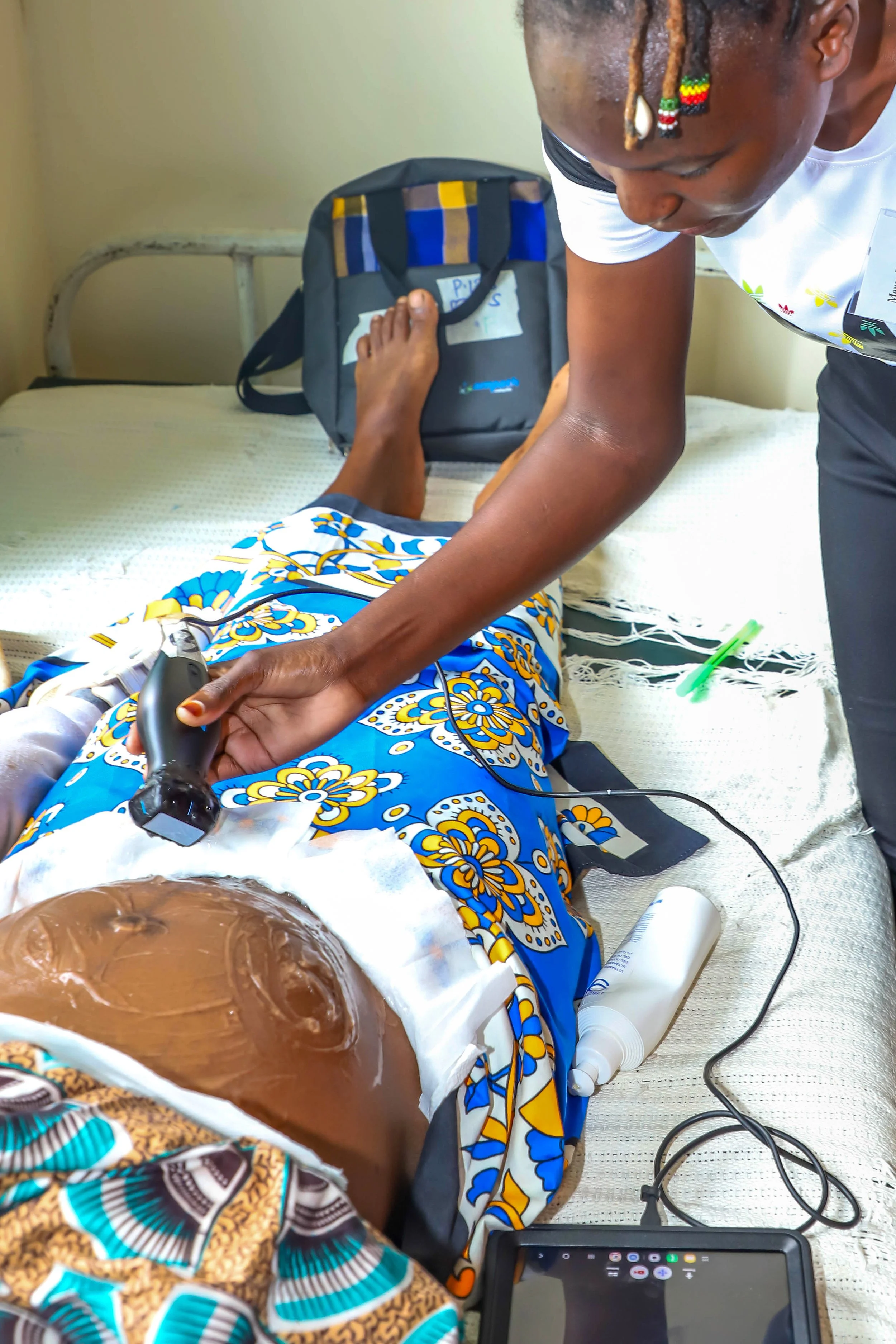
AMPATH is training frontline healthcare workers across western Kenya to use point-of-care ultrasound to spot obstetric, cardiology and breast issues early.
Last year also saw Dr. Kara Wools-Kaloustian step into her role as executive site director for the AMPATH Consortium in Kenya, bringing decades of experience within AMPATH to guide its next chapter. “I am particularly drawn to projects that have an impact at a population level and preserve health as opposed to treating illness,” said Dr. Wools-Kaloustian, reflecting AMPATH’s evolution toward whole-system care.
Beyond clinics and laboratories, AMPATH’s reach continued to expand into communities supporting orphans and vulnerable children, strengthening maternal and child health, and addressing the social determinants that shape health outcomes. These programs, often less visible than clinical care, remain essential to AMPATH’s holistic approach.
What sets AMPATH apart is that it is not a single program, but a dynamic ecosystem of care, research, education and community working together. It is a model that has not only improved millions of lives in Kenya but is increasingly informing global approaches to improving health.
For donors, every investment in AMPATH supports a system that is locally grounded and designed for long-term sustainability. It fuels training for the next generation of Kenyan health leaders, advances research that shapes policy, and ensures that patients can access the care they need.