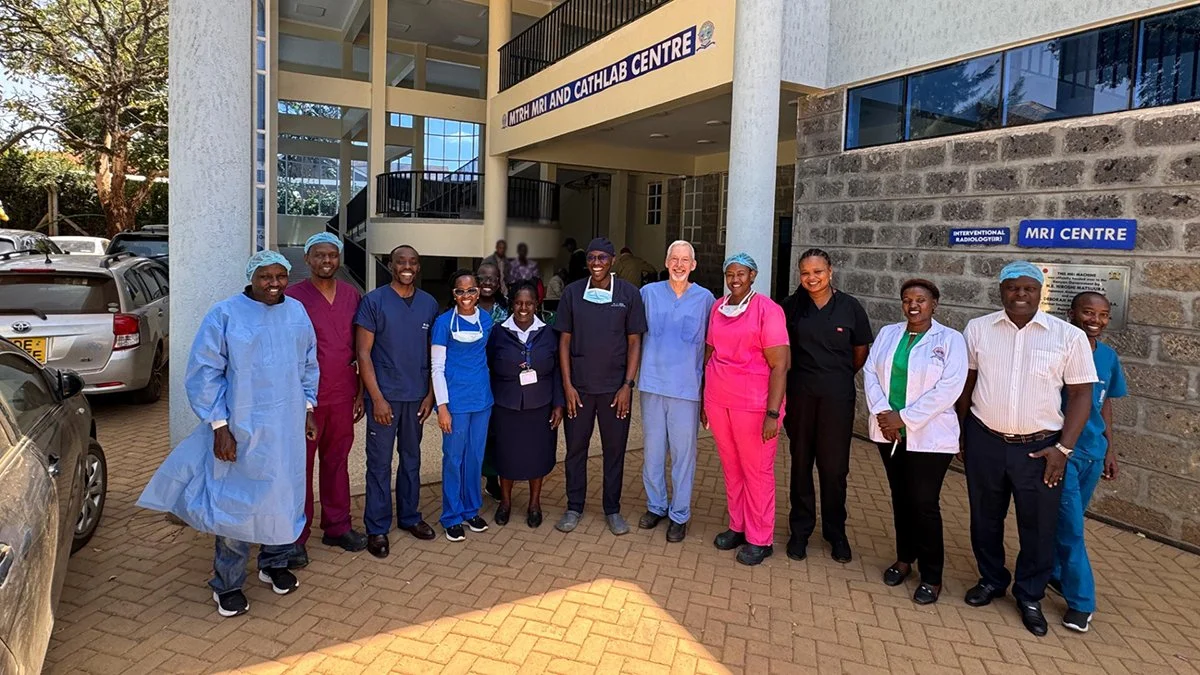
AMPATH Interventional Radiology Partnership Performs First-of-Its-Kind Procedure
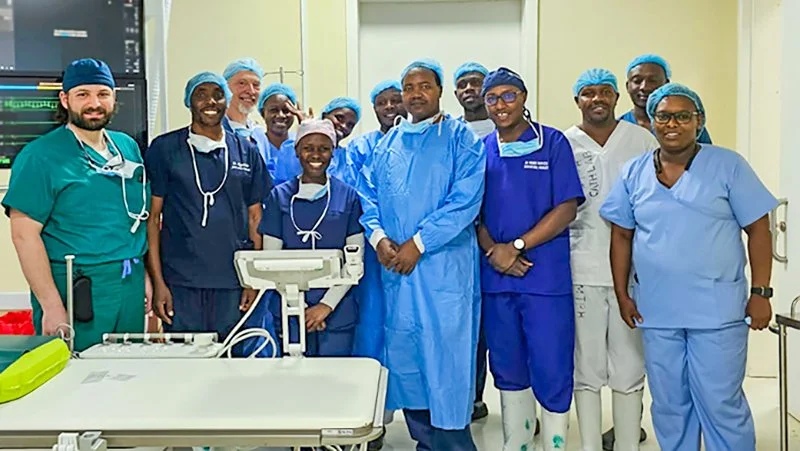
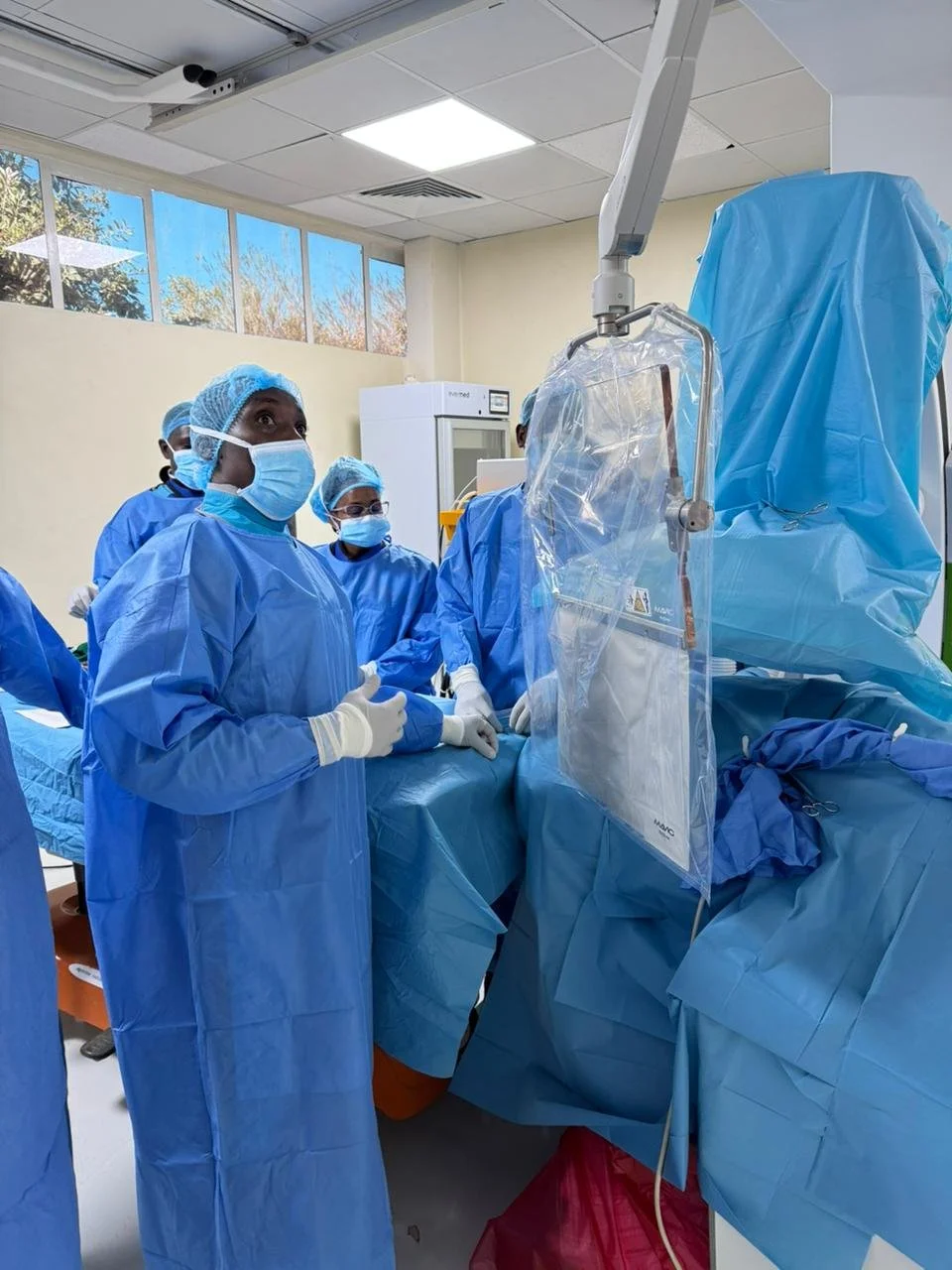
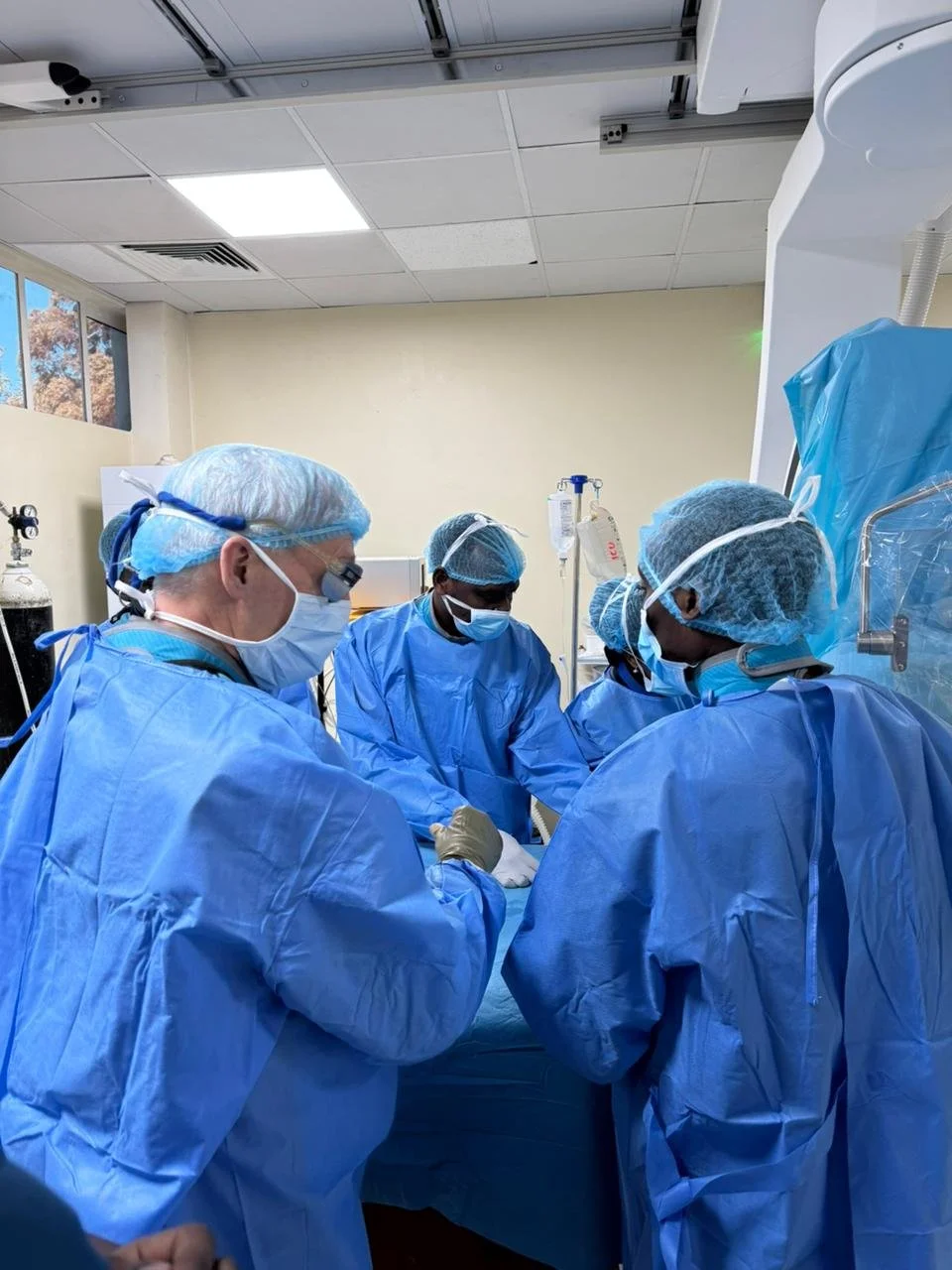
The surgery team after the TIPS procedure
A team of physicians from the AMPATH partnership recently completed the first TIPS (transjugular intrahepatic portosystemic shunt) procedure at Moi Teaching and Referral Hospital (MTRH). It was the first time the procedure for patients living with advanced liver disease and life-threatening complications has ever been performed in Kenya.
TIPS is a minimally invasive interventional radiology procedure used to treat serious complications of elevated blood pressure in the vein that carries blood from the digestive organs to the liver (portal hypertension) including recurrent internal bleeding and fluid buildup caused by liver cirrhosis. The procedure creates a new pathway for blood flow through the liver, helping reduce dangerous pressure in the veins that can cause death if left untreated.
Until now, Kenyan patients needing the procedure faced few options. The recent addition of an angiographic suite at MTRH and years of training and relationship building through the AMPATH radiology collaboration made the milestone possible. Interventional radiologists use fluoroscopy inside an angiographic suite to see inside the human body. Patients lie on a table with an X-ray source underneath them and an image intensifier that receives the X-rays above them. That system allows an interventional radiologist to see internal organs in real time and to fix things inside the body using needles, wires, and catheters rather than through surgical incisions.
Through remote lectures, in-person exchanges and clinical mentorship, faculty from Indiana and Kenya have worked side-by-side through the AMPATH partnership to strengthen radiology education and patient care in western Kenya.
“Completing the first TIPS in Kenya brought a great feeling of achievement, joy and hope that such a highly technical and skilled procedure could be done locally within our institution,” said Dr. Cornelius Kipchirchir Koech, consultant diagnostic and interventional radiologist at MTRH. “With more resource availability, more of such procedures can be done.”
“Our new angio suite makes me feel at home and is a blessing to the region enabling specialists to offer the highest level of care achievable,” said Dr. Daniel Chepsiror, also an interventional radiologist at MRTH. “The TIPS procedure enabled us to use skills previously acquired and marked a great milestone. But it is the tip of the iceberg of future high-end, specialized interventional radiology procedures,” he added.
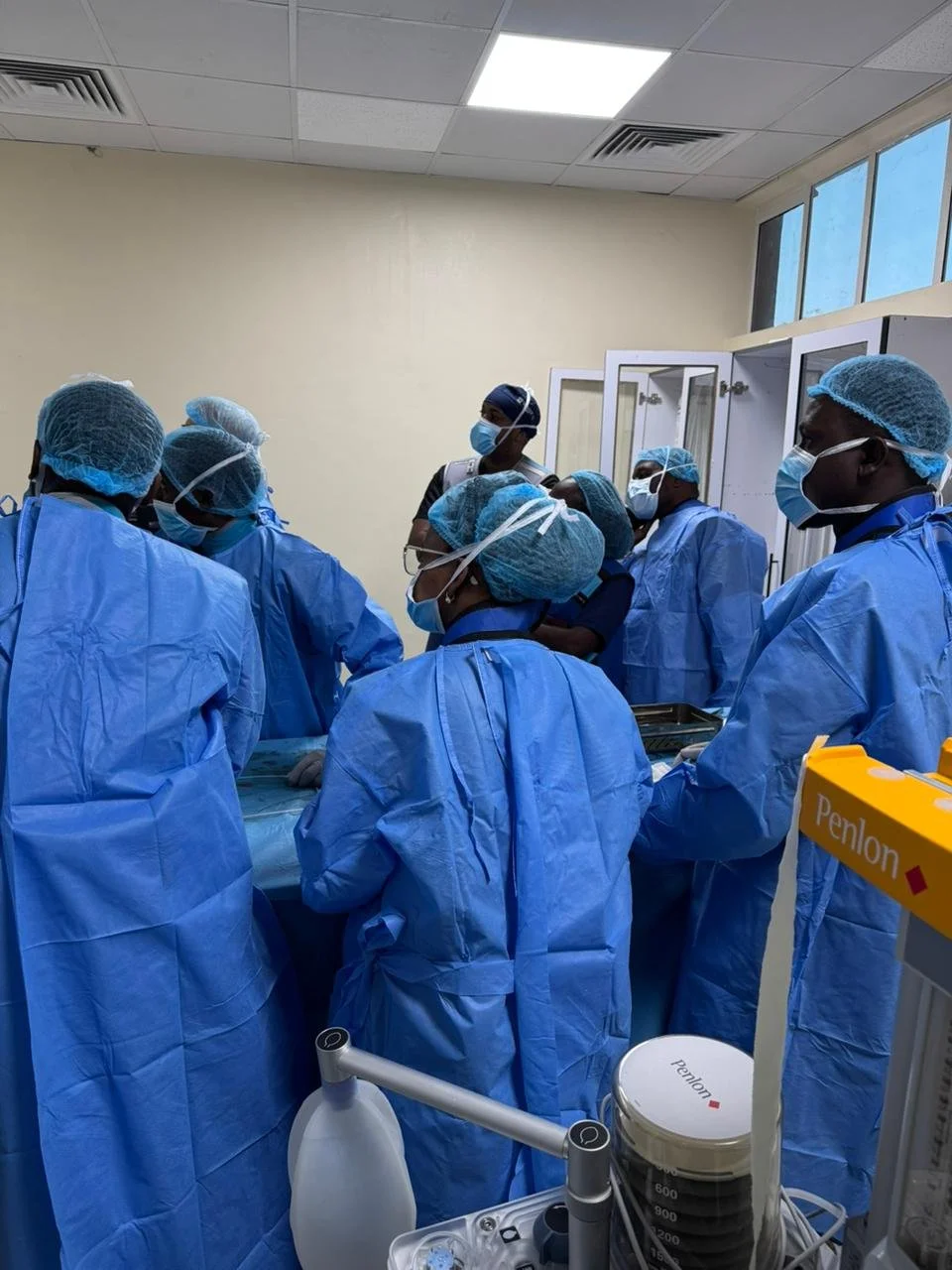
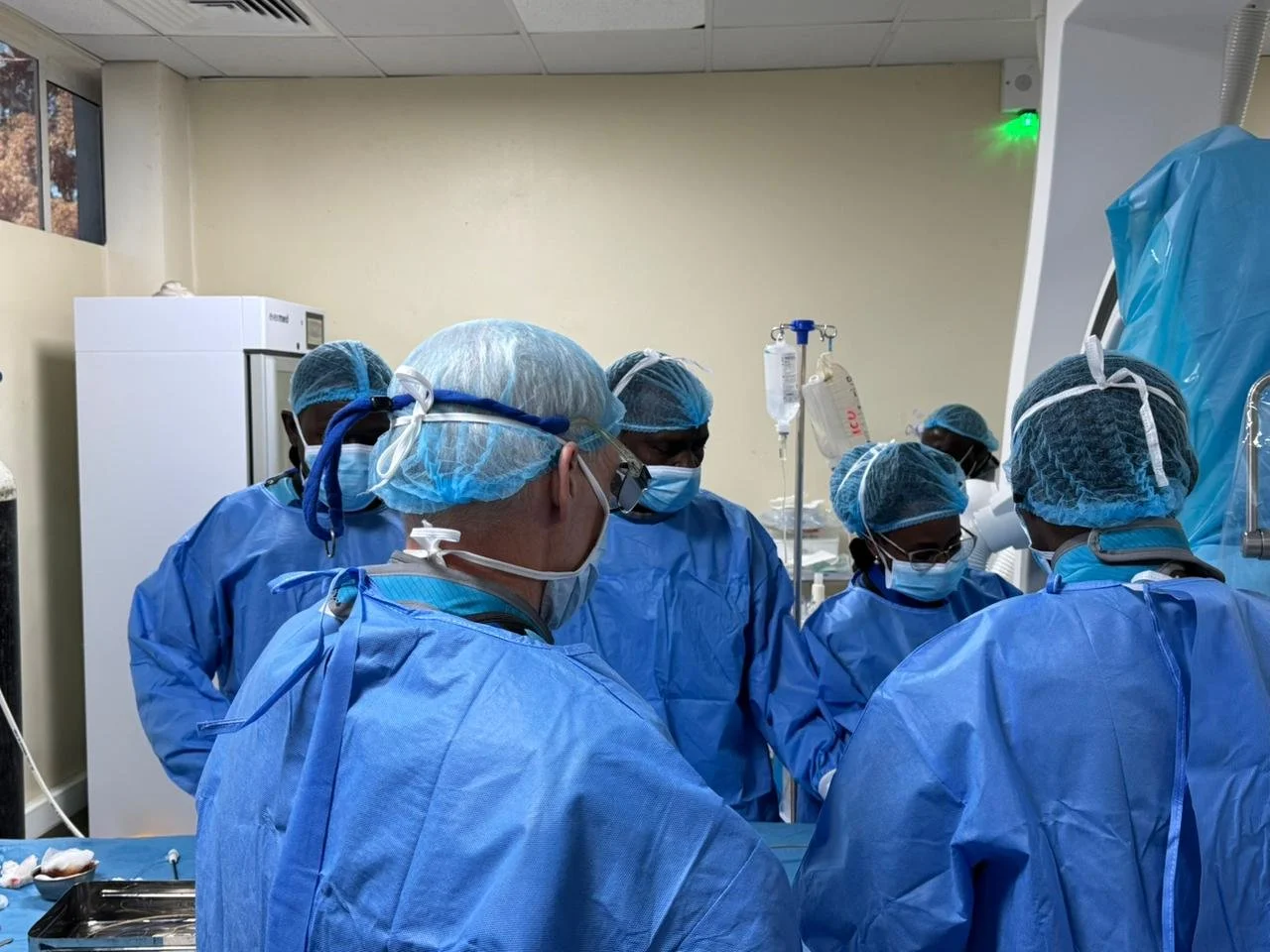
The TIPS procedure was performed during an interventional radiology training camp that brought together AMPATH faculty from Kenya and the U.S. focused on expanding local capacity in advanced minimally invasive care. In addition to the TIPS procedure, the team completed other interventional radiology procedures including retrieving a guide wire from a person’s aorta, placing internal biliary drains and angioplasty to remove vein blockages.
“Dr. Kipchirchir and Dr. Chepsiror were the primary operators on the TIPS procedure with my assistance,” said Matt Johnson, MD, associate director of global health for radiology and professor of radiology, imaging sciences and surgery at Indiana University School of Medicine, who helps lead the radiology partnership with his colleagues in Kenya. “They did most of it.”
The team also included Kenyan radiologists completing fellowship training in interventional radiology at Kenyatta National Hospital. The AMPATH collaboration is working toward launching a similar fellowship program at Moi University in the near future. “The fellowship program will impart knowledge and skills to trainees which will enhance and elevate the patient care. Training by local and global leaders in interventional radiology will ensure optimal care to patients here in Eldoret as they would access in Indiana or Delhi,” said Dr. Chepsiror.
Kenya has approximately 200 radiologists serving a population of more than 54 million people. Dr. Kipchirchir and Dr. Chepsiror are the only interventional radiologists at MTRH serving all of western Kenya, eastern Uganda, South Sudan and northern Tanzania. Advanced radiology procedures remain difficult to access for many patients, particularly outside major urban centers. Expanding local expertise means more patients can receive care closer to home and earlier in the course of disease.
“Expanding capacity in interventional radiology in Kenya and specifically Eldoret and western Kenya will greatly enhance care to the patients and especially access to these minimally invasive interventions with great outcomes,” Dr. Kipchirchir said. “This will improve quality of life to the patients and overall less hospital stay for the patients.”
The challenges remain significant. TIPS procedures require specialized imaging equipment with regular maintenance, stents and procedural supplies that are often difficult to obtain consistently in resource-limited settings. In fact, the stent used in the inaugural TIPS procedure was provided by a colleague at Kenyatta Hospital. The success of the first case demonstrated what becomes possible when expertise, training and partnership align.
Dr. Johnson appreciates his colleagues at IU and throughout the radiology community for supporting the partnership by sharing their expertise through remote teaching and joining him on past and future teaching trips to Kenya. He thanked Varian/Siemens Healthineers, Cook Medical, Argon Medical Devices, Boston Scientific and Sirtex for supporting AMPATH’s efforts by donating some of the needed supplies and equipment.
Research is another key component of the radiology partnership. Although just in the early stages, Dr. Johnson hopes to develop a study based on the team’s clinical experiences. “We have the opportunity to demonstrate the high prevalence of cirrhosis, or people with portal hypertension from other causes such as schistosomiasis, and that it’s a huge health problem,” Dr. Johnson said. “And that by treating it earlier you can really have a massive effect on people’s quality of life and longevity of life.”
“TIPS is a procedure which is life saving and life changing for patients with liver cirrhosis, portal hypertension and other serious health conditions,” Dr. Kipchirchir said. “We should continue screening patients and working towards making the required supplies and stents available to be able to do more of these procedures.”
“I’m proud of the long-term and continued partnerships through AMPATH and soon the Society of African Interventional Radiology and Endovascular Therapy (SAFIRE) in advancing the minimally invasive procedures through interventional radiology which are cost effective with the best outcome,” concluded Dr. Chepsiror.
In the MTRH angiographic suite in Eldoret, years of shared teaching, mentorship and partnership translated into a new level of care for patients in Kenya. For the physicians who helped make it possible, the first TIPS procedure was just the beginning of what comes next.