
Bringing Lifesaving Ultrasound to the Front Lines of Care in Western Kenya
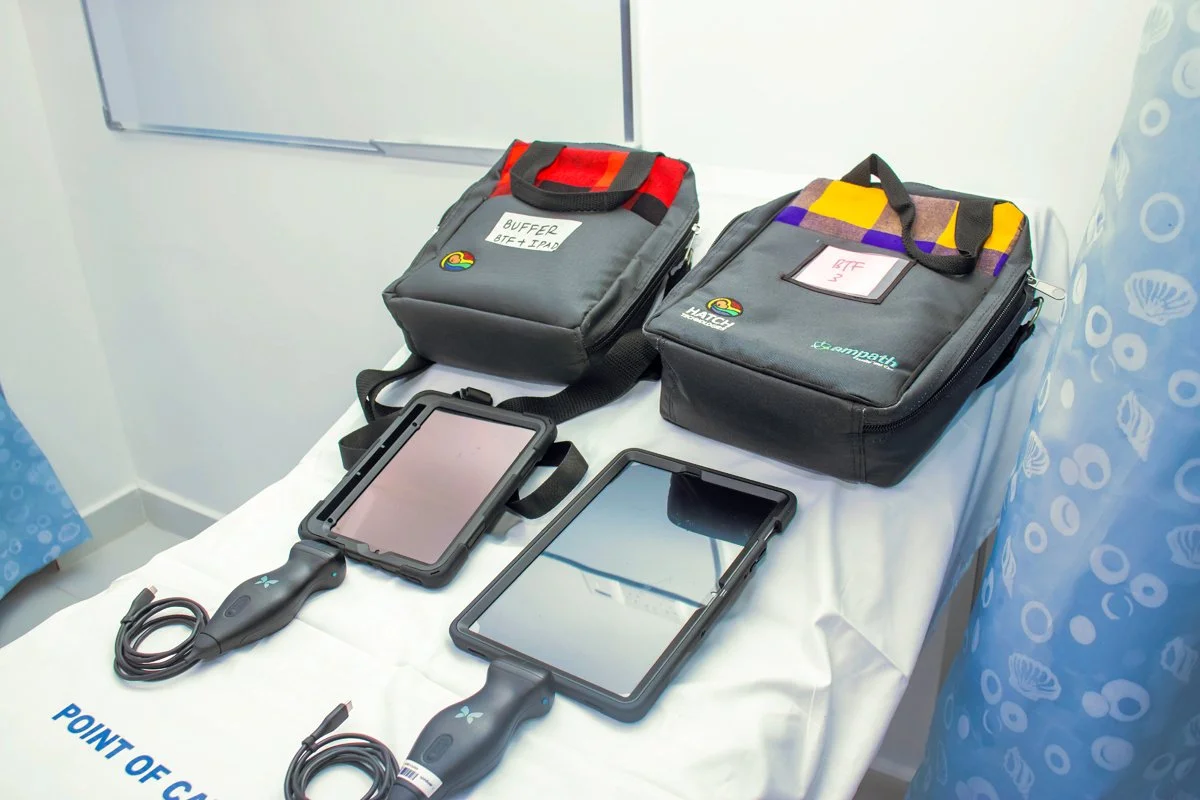
A woman arrived at her local health facility in western Kenya for a routine antenatal visit during her second pregnancy. She had never received an ultrasound before. A handheld bedside ultrasound exam revealed she was carrying twins which prompted healthcare workers to refer her for delivery by cesarean section at a higher-level facility.
Another patient arrived with severe shortness of breath, generalized swelling and dangerously low oxygen levels. A handheld bedside ultrasound revealed a large amount of fluid in the sac around his heart, allowing clinicians to urgently refer the patient for specialized cardiac care.
These are the kinds of life-changing decisions being made regularly through AMPATH Kenya's Point of Care Ultrasound (POCUS) initiative, which is bringing diagnostic imaging to the front lines of primary healthcare across western Kenya.
POCUS is a tool healthcare workers and clinicians use to take quick, real-time images inside the body, often right at a patient's bedside. While it is not intended to replace formal sonography, this technology is used alongside a physical exam to give healthcare workers more immediate information to guide treatment or referral decisions.
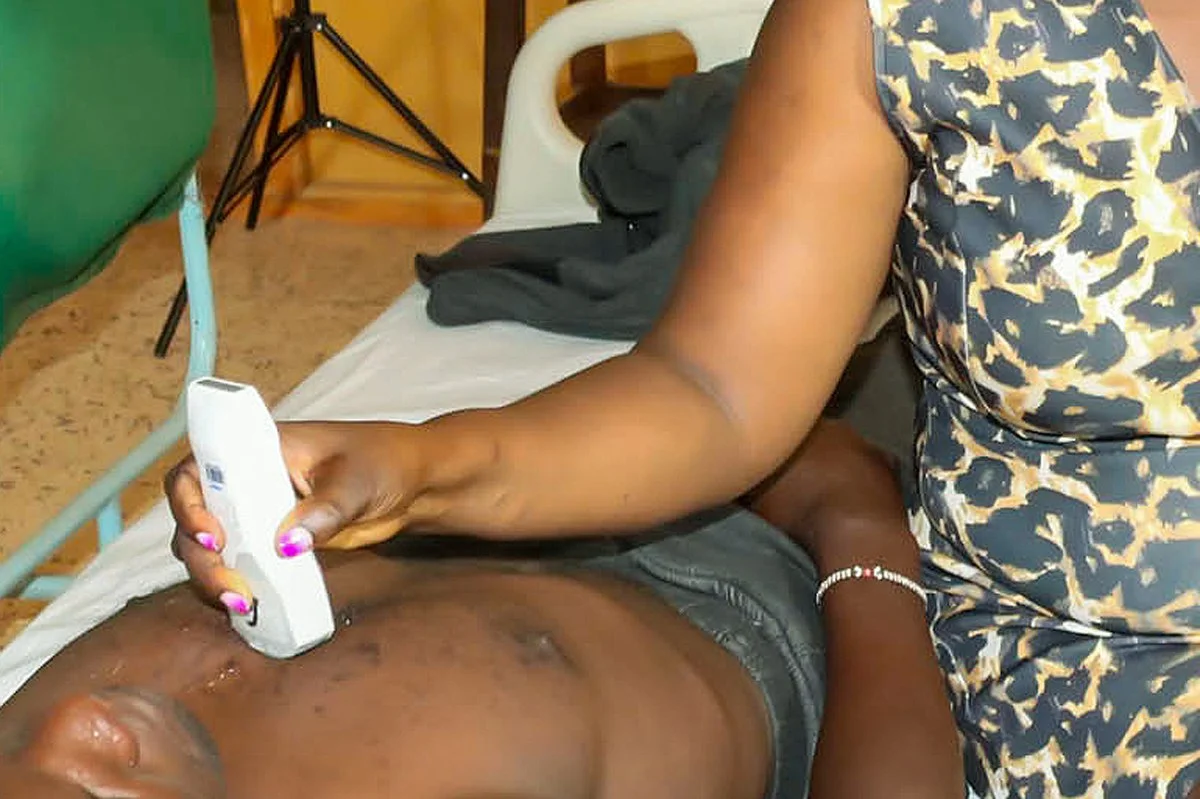
Since launching the initiative in early 2025, AMPATH partners led by Moi University have worked with county governments to train more than 1,100 healthcare workers, deployed 246 handheld ultrasound devices to 203 health facilities and completed more than 12,000 scans. The project is creating a sustainable system that helps frontline providers recognize serious conditions earlier, begin treatment sooner and connect patients to the right level of care.
"We are building our project on the primary care network model. We have the Level 4 facilities serving as our hubs, while Level 2 and Level 3 facilities become the spokes," said Dr. Hussein Elias, family physician, faculty member in the Moi University Department of Family Medicine and co-lead of the AMPATH POCUS project.
The initiative focuses on four high-impact clinical areas: obstetric care, heart failure, breast disease and pneumonia. It is designed to help providers answer critical clinical questions at the point of care, allowing them to begin appropriate treatment or make timely referrals without waiting for access to traditional imaging services which can be limited or unavailable in many parts of western Kenya.
Rather than introducing ultrasound as a standalone technology, the initiative integrates it into Kenya's evolving primary healthcare system. Healthcare workers complete online coursework, intensive hands-on training and objective skills assessments before returning to their facilities where they continue learning through image review, virtual mentorship and ongoing support from county-based POCUS champions.
"Training continues through longitudinal mentorship, where images from all devices can be uploaded and reviewed by experts to support continued learning and improve image quality," said Dr. Daria Szkwarko, family medicine physician at Brown University and co-lead of the project.
That sustained mentorship is already translating into better care.
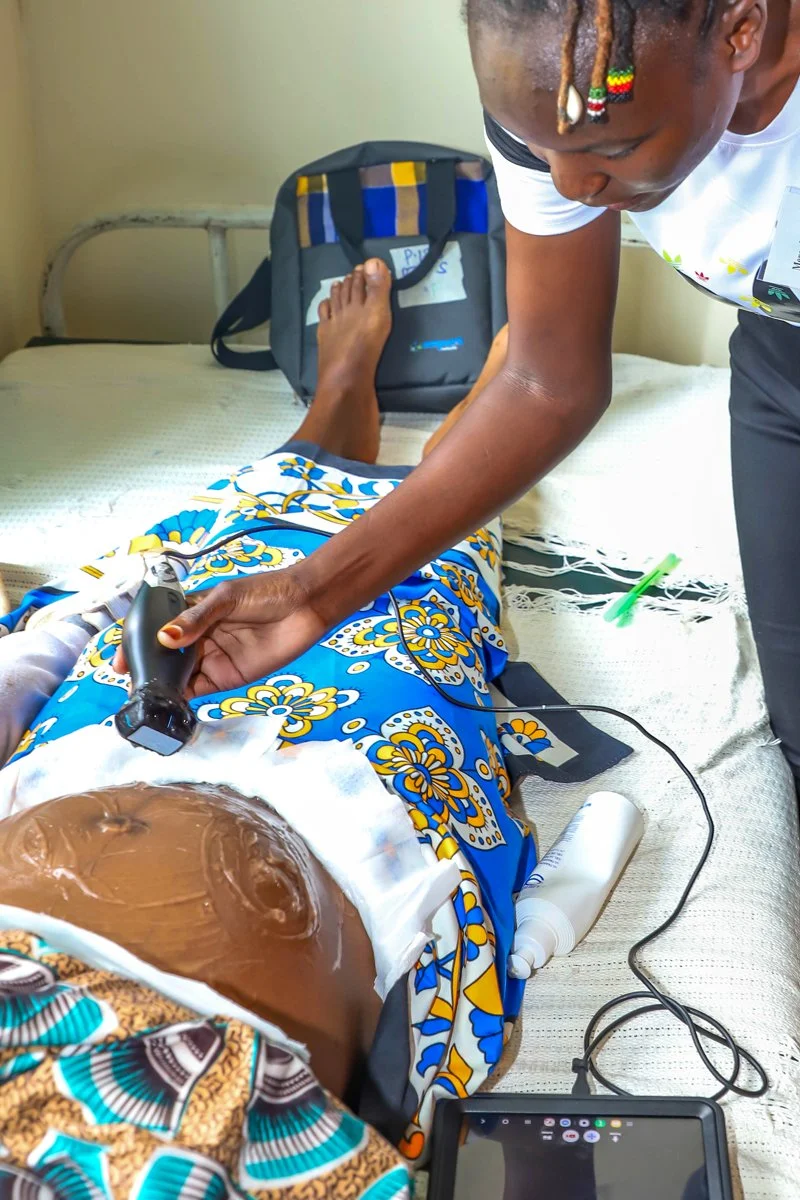
"I went to [my nearby facility] for my routine clinic, and they asked if I had ever had an ultrasound before,” recalled one expectant mother. “This was my second pregnancy with no ultrasound performed ... the nurse poured some liquid [gel] on my stomach and used an object [probe] to look at how my baby was continuing ... she instructed me not to come [here] when labor had started to kick in... the healthcare workers informed us that we would need to do a cesarean section."
Healthcare workers are seeing similar results across other areas of care.
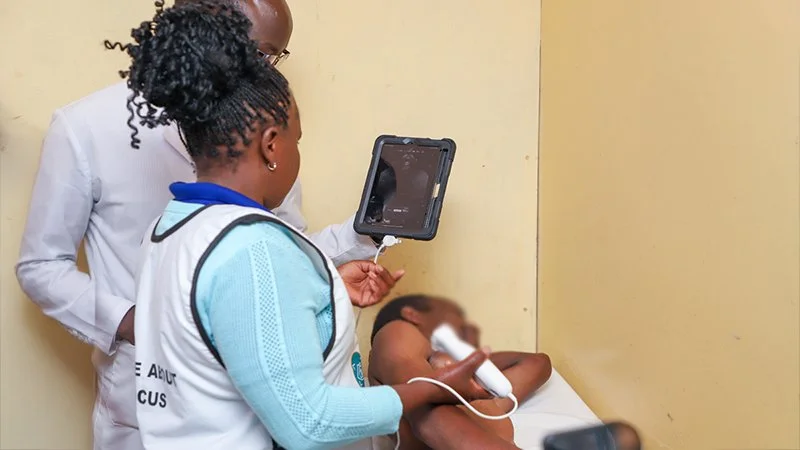
"A patient came in with known hypertension, generalized body swelling, difficulty in breathing, and oxygen saturation below 80,” said a healthcare worker in a Level 4 facility. “We performed cardiac POCUS at the bedside and found a large pericardial effusion (fluid in the sac around the heart). This helped us understand the cause of the breathing difficulty and we referred for specialized care. The patient was treated in the cardiac unit and is now doing well at home."
The project is also generating evidence that point-of-care ultrasound strengthens primary healthcare systems. Preliminary findings show that after POCUS deployment facilities experienced a 26 percent increase in antenatal care revisit utilization, suggesting that access to ultrasound may encourage more women to return for recommended prenatal care. Researchers are also evaluating how the technology supports clinical decision-making and referral pathways across western Kenya.
AMPATH partners work closely with county governments before implementation begins, engaging health leadership, establishing county technical working groups and co-developing referral policies that strengthen connections between primary health facilities and referral hospitals. Those partnerships have helped create a model that counties can sustain as the program expands.
The initiative has also established a dedicated POCUS Skills Lab at Moi University, launched a university-wide POCUS Working Group and is preparing to host the first Africa Region POCUS Summit in Eldoret in January 2027, bringing together clinicians, educators and partners to advance point-of-care ultrasound across the continent. They are working towards creating a Center of Excellence for POCUS in the region.
Support for this initiative is being provided through Panorama Global, a U.S. charitable foundation, with funding from Gates Foundation, Novartis, Eli Lilly and Company, and MSD through its MSD for Mothers initiative. In-kind (software/partial hardware) support by Butterfly Network Global Health Program.