
AMPATH Program for Orphans and Vulnerable Children Provides Needed Resources
Left to raise seven children alone after her husband moved on to another family, Amanda* survived by the thinnest margin. She battled HIV, stigma, and the constant worry of providing food for her children ages 1-16. Even after regaining control of her health, providing for her family was a daily struggle.
AI generated image
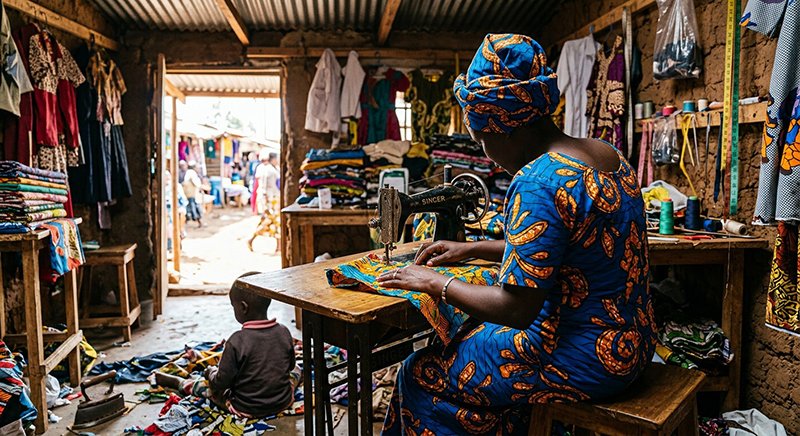
Today, the 48-year-old caregiver runs her own tailoring business, earns a daily profit, saves regularly, and is steadily building a more secure future for her children. Her transformation illustrates how targeted health, education and economic support can help vulnerable families move from crisis to stability.
Amanda’s family was originally enrolled in Orphans and Vulnerable Children (OVC) program in 2012.
“I struggled with self-denial, stigma, ART (HIV medicine) adherence and often felt overwhelmed,” she said. Over time, with support from a peer educator and enhanced adherence counseling, she accepted her status, became adherent to treatment, and emerged as a champion for her own well-being.
While her health improved, the family’s financial situation remained fragile.
Amanda struggled to cover school fees, clothing, and other household expenses. Although she had tailoring skills from previous employment, she lacked the resources needed to turn those skills into a sustainable source of income.
Her situation reflected a broader challenge facing vulnerable families enrolled in AMPATH 4TheChild, a one-year extension of the OVC program implemented by Moi University College of Health Sciences in Bungoma and Busia counties with support through Indiana University. The program concludes at the end of this month.
A household assessment conducted by the program found that while many families were making progress in health and safety, economic stability remained the greatest challenge. Nearly nine out of ten households assessed needed additional support to strengthen their livelihoods and meet essential family needs.
AMPATH 4TheChild works in collaboration with the national and county governments, clinical partners and other stakeholders to strengthen the health, safety, education, and economic resilience of vulnerable households while improving outcomes for children and adolescents living with HIV. By the end of March 2026, it had reached 2,475 OVC from 842 households.
The project employs a case management approach, which is a seven-step structured process of identifying, enrolling, assessing, planning, supporting and monitoring OVC households to ensure their unique needs are met. The program provided Amanda with financial literacy training and a sewing machine, enabling her to launch a tailoring business from home. The investment proved transformative.
Amanda began making and selling dresses, gradually building a customer base and saving enough money to rent a small workspace.
As her business grew, so did the financial demands of raising seven children. School fees and household expenses consumed much of her income, making it difficult to expand the enterprise she had worked so hard to establish.
When AMPATH 4TheChild reassessed her household in 2025, case managers identified additional needs and tailored support accordingly. One child received school fee assistance, while other children benefited from scholastic materials and sanitary towels. Amanda was also linked to other education support opportunities and secured a small government bursary, helping reduce the burden on the family budget.
The project then helped strengthen the business itself. Amanda received business management training and an 8,000 Kenyan shilling ($61 USD) business boost grant. She combined the funds with her own savings to purchase fabric ahead of the busy holiday season, allowing her to increase production and generate higher earnings.
Today, Amanda earns an average daily profit of 200 Kenyan shillings ($1.50 USD) and saves approximately 800 shillings ($6 USD) each week. She also participates in a savings group where members save together, access loans, and receive psychosocial support.
Her story is one of 51 caregivers in Kimilili and Bunyala North wards who have received business boost grants through the project. More importantly, it demonstrates how integrated support can help families move beyond immediate survival. By combining health services, education assistance, financial literacy, and livelihood support, AMPATH 4TheChild is helping caregivers like Amanda build resilience and create new opportunities for the children who depend on them.
*Name changed to protect privacy.