
AMPATH Marks One Year of Support for New Social Health Insurance System
AMPATH’s Health Financing team is marking one year of supporting Kenya’s new Social Health Insurance. Their work has strengthened both household access to care and the financial stability of local health facilities.
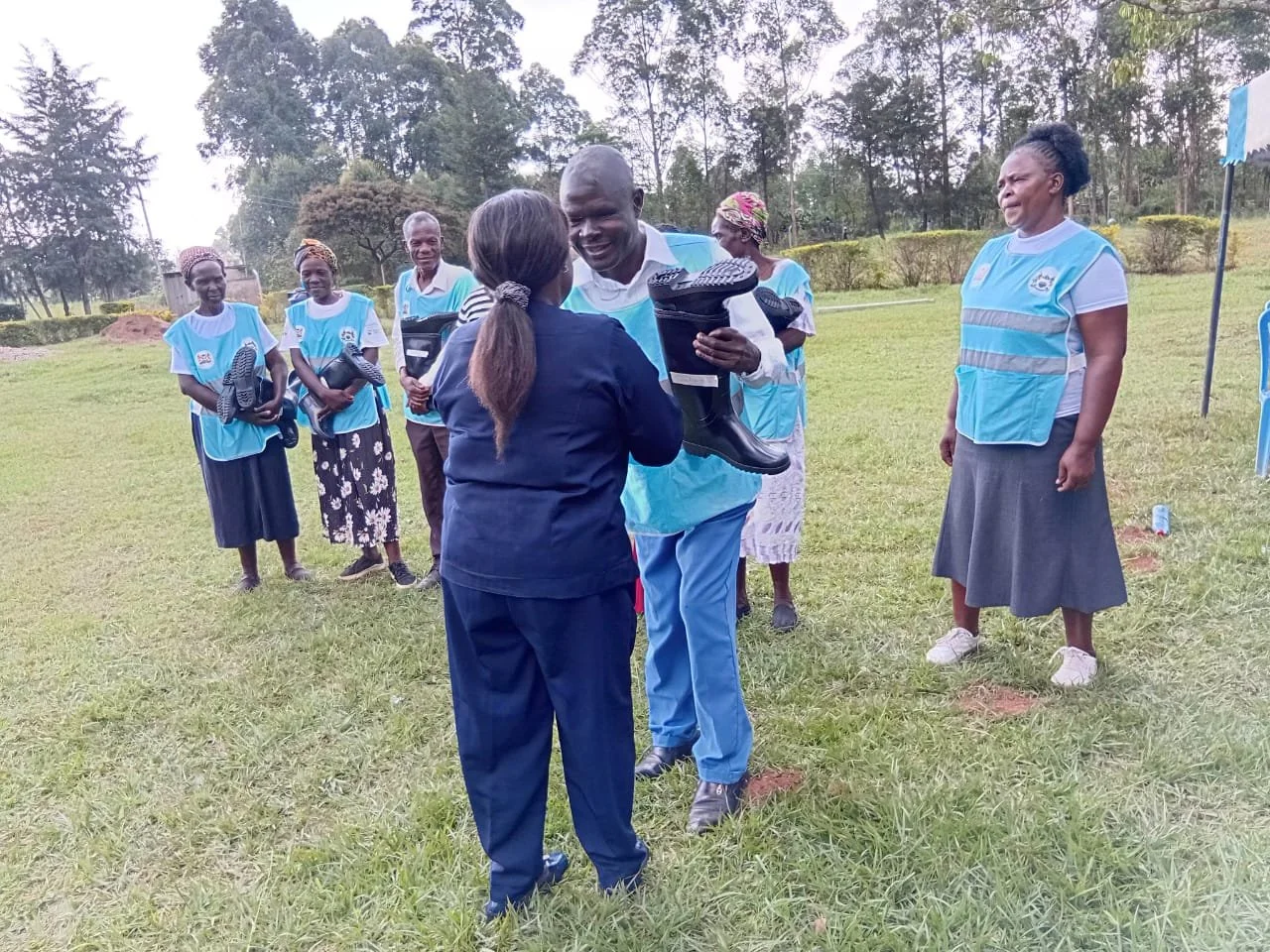
Milo Health Centre purchased gum boots for Community Health Promoters to help them move through villages during rainy seasons.
The goal of Kenya’s Social Health Authority (SHA), which launched in October 2024, is to ensure that every household can receive primary health care without paying at the point of service. Social health insurance (SHI) is a way for a country to pool contributions so that families do not face sudden medical costs. Facilities are reimbursed for the services they provide which generates the resources to keep the facilities functioning.
Over the past year, the AMPATH Health Financing team supported 91 facilities across six Primary Health Care Networks in Elgeyo Marakwet, Busia and Bungoma counties. The team became qualified as “trainers of trainers” with the Social Health Authority. This allowed them to help health workers reorganize patient flow to include SHA registration desks, build systems for billing and revenue tracking, and teach continuous medical education sessions on facility finance.
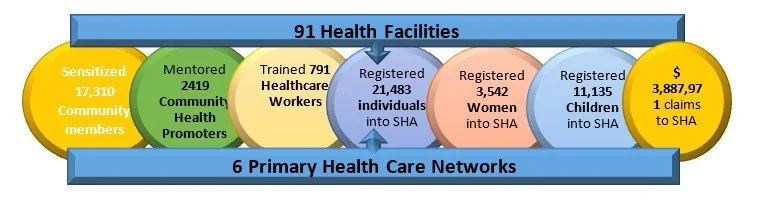
A major part of the work involved strengthening community-level registration. AMPATH trained 2,419 Community Health Promoters (CHPs) on household registration and updating personal details. These CHPs reached more than 24,000 households. Special attention was given to children who accounted for 52 percent of all direct registrations.
Improved registration translated into more accurate claims. The supported facilities received a total of 3,887,971 KSh in reimbursements from October 2024-October 2025. These funds helped sustain stocks of medical supplies, improve infrastructure and purchase new equipment.
Thus far, more than 24 million Kenyans Have registered for SHA which is the highest enrollment since the introduction of social health insurance in Kenya 56 years ago. For comparison, the previous National Health Insurance Fund (NHIF) had maximum enrollment of 16.2 million Kenyans.
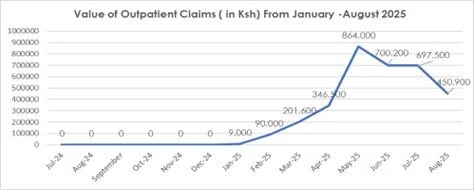
Value of outpatient claims Amukura subcounty Hospital
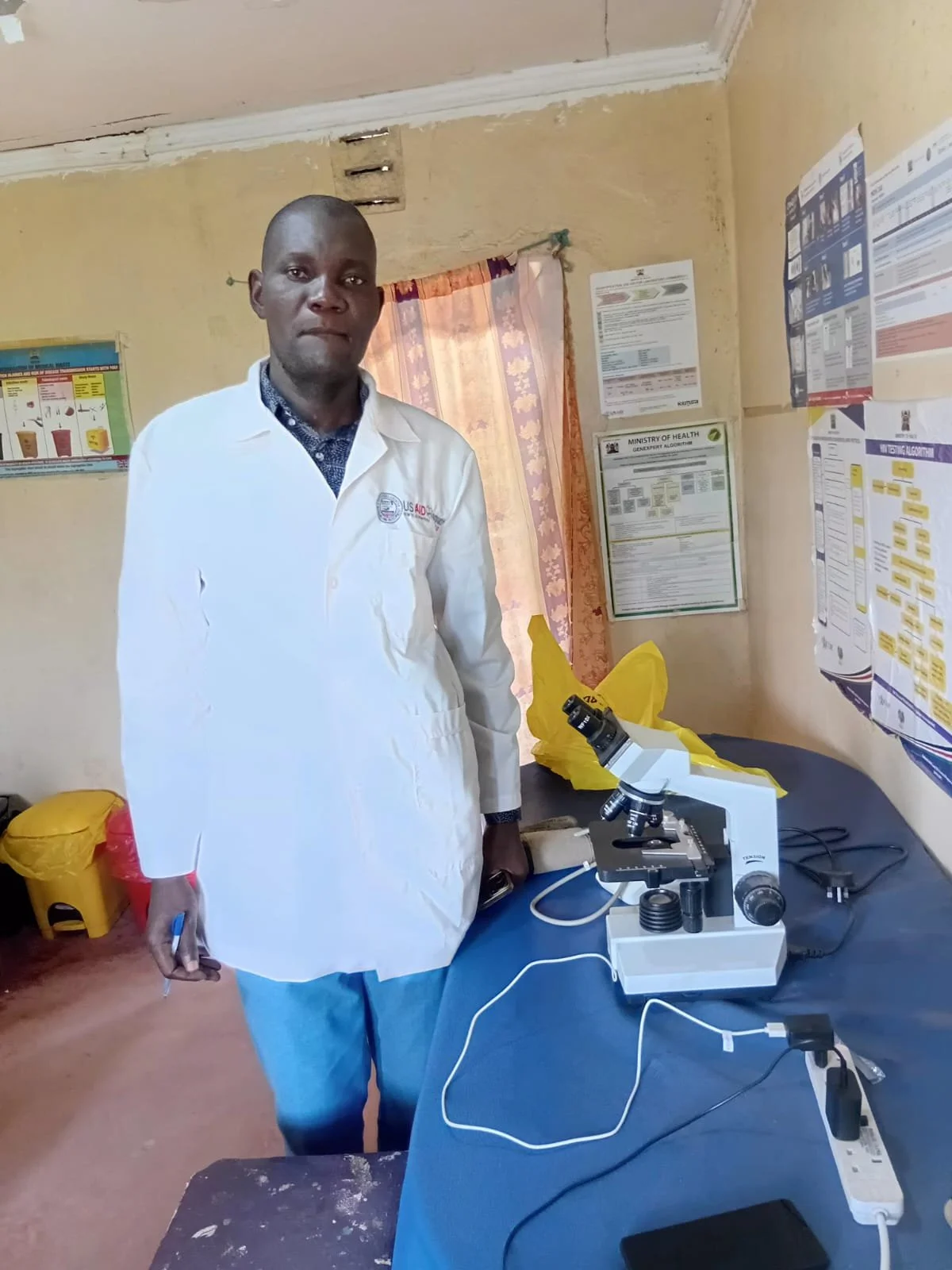
The Khalala Dispensary purchased a binocular compound microscope
In Bungoma County, Khalala Dispensary used reimbursements to buy a binocular compound microscope. The facility serves a malaria endemic area, and the microscope is essential for early detection among women and children who have benefited from increased enrollment. Miendo Dispensary used multiple reimbursements to construct an oxygen holding unit for its maternity department that is expected to reduce maternal and infant deaths and strengthen emergency care.
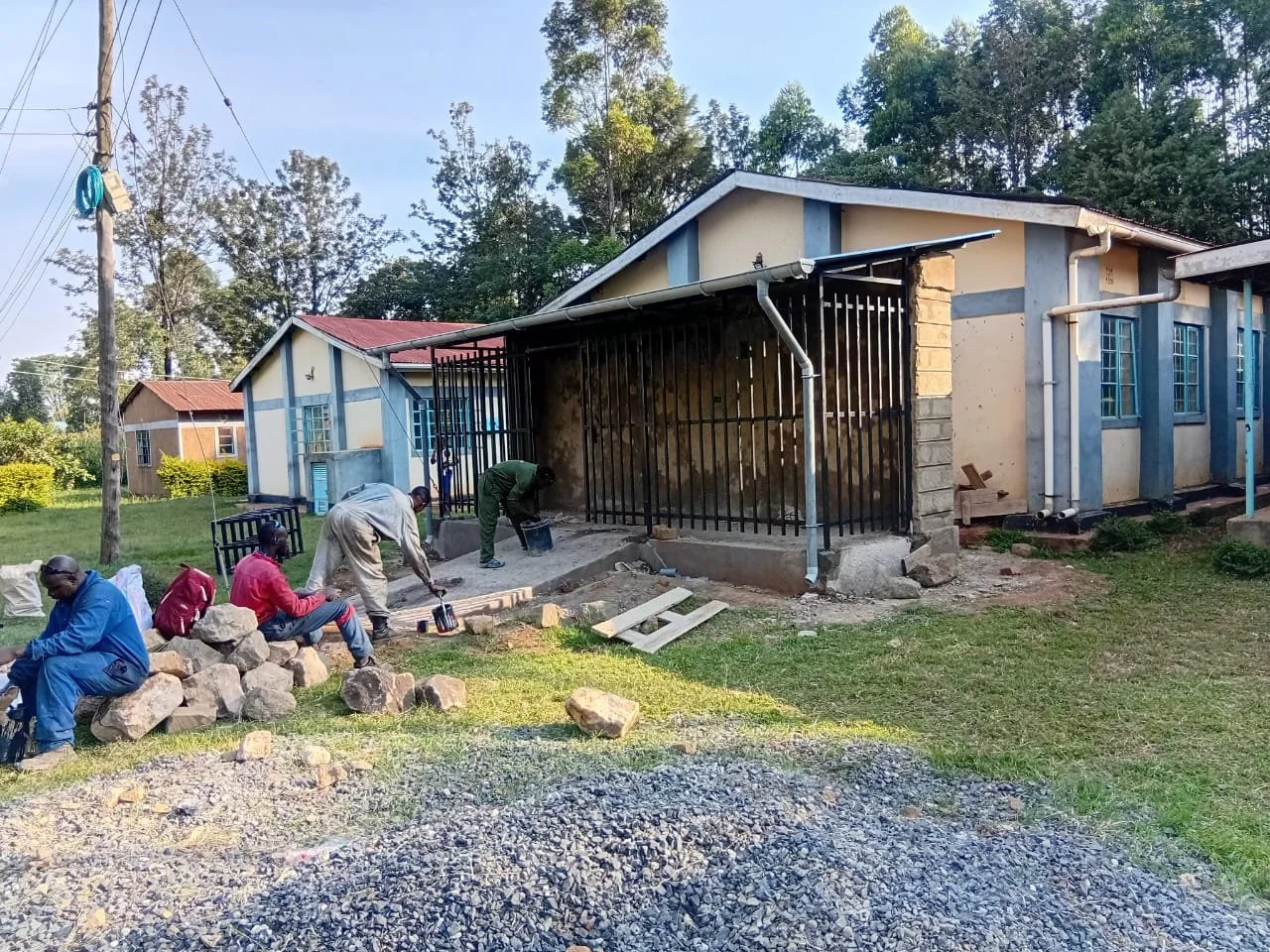
In Busia County, Rukala Model Health Center used reimbursements to clear six months’ arrears of casual wages for six staff members, purchasing essential drugs, supporting four community outreaches, and repairing and painting sections of the main facility.
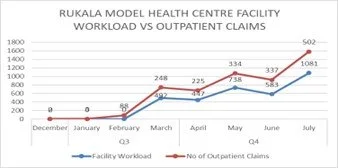
Workload at Rukala Health Center since the inception of SHA
Miendo Health Centre built an oxygen unit with SHA reimbursements
Facility Manager Paul Were said that all clients are given the opportunity to register with SHA before being served. “At our facility, through mentorship of AMPATH, we reduced cash payments from clients and enhanced SHA enrollment. As a result, most patients are now registering into SHA. Additionally, we have dedicated SHA clerks at the facility who handle the registration process.”
At Amukura Sub-County Hospital, claims have increased as well. “Since AMPATH came to Teso North, there has been an increase in claims and tracking of facility claims” said Dr. Festus Kigen, medical superintendent.
AMPATH also helped strengthen the connection between health facilities and CHPs. Regular meetings in Bungoma County brought facility leaders and community health personnel together to review progress and align their work. These discussions encouraged facilities to support community services. Milo Health Centre, for example, purchased gum boots for CHPs to help them move through villages during rainy seasons.
CHPs use a digital tool called the Electronic Community Health Information System, or eCHIS. It records information on antenatal care attendance, water and sanitation practices, screening for noncommunicable diseases, and maternal and child health indicators. When facilities collaborate with CHPs, they enhance their understanding of local health trends and provide targeted services.
A member of the AMPATH Health Financing team reflected on the progress so far. “What we are seeing is that facilities are becoming stronger while households are beginning to benefit from reliable access to care,” said Salome Alice Sijenyi, manager, Health Systems Strengthening.
The first year of the Social Health Insurance rollout has shown that when community services and health facilities work together, families receive better care and facilities gain the resources they need to perform optimally.