Sally Test Child Life Program Continues to Expand Care and Training
A small patient arrives at Moi Teaching and Referral Hospital (MTRH) clinging tightly to her mother’s hand. Her eyes fix on the unfamiliar machines lining the corridor and reflect fear and confusion. Beside her, a Child Life Specialist kneels to offer a toy stethoscope and support.
Moments like this unfold every day through MTRH’s Sally Test Child Life Program, a transformative force within pediatric care within the AMPATH Kenya partnership. While medical treatment addresses disease, Child Life Specialists tend to the fear, confusion, and emotional weight children and families carry with them into hospital wards.
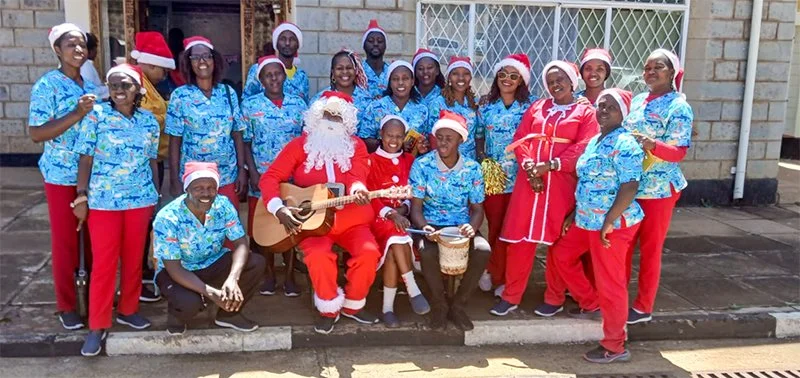
The Sally Test Child Life team spread cheer to children in the hospital during the holidays.
The program was created based on the vision of Sarah Ellen Mamlin to ensure that children facing illness are supported not only physically, but emotionally and developmentally. The program is named for Sarah (Sally) Test, an AMPATH supporter from Indiana who provided the funds to launch the first child life program in sub-Saharan Africa. Her family continues to generously support the program today.
Over time, it has grown into a comprehensive model of family-centered care, now reaching more than 20 units across the hospital. In 2025 alone, the team supported approximately 65,000 children and delivered more than 120,000 therapeutic interventions, using play, preparation, education, and comfort to help young patients cope. More than 300 caregivers participated in the programs support groups and approximately 500 healthcare providers participated in education sessions.
Child Life Specialists help demystify medical procedures, explain diagnoses in language children can understand, and provide safe outlets for emotional expression. Through medical play, storytelling and distraction, they help children regain a sense of control in an environment that often strips it away.
“Children remember how they felt long after they forget the details of treatment,” said Elizabeth Kabuthi, coordinator of the Sally Test Child Life Program. “Our work is about protecting their sense of safety and dignity, even in the most difficult moments.”
Those difficult moments often extend beyond procedures. The program plays a critical role in pediatric palliative care, walking alongside families facing life-limiting illness and loss. In 2025, Child Life Specialists provided targeted palliative care and bereavement support to dozens of families, offering memory-making activities, grief counseling and comfort during end-of-life care.
“Sometimes our role is simply to sit with a child and their caregiver in silence,” said Regina Mwangi, a Child Life Specialist. “There is power in being present, in acknowledging pain without rushing it. That presence can make an unbearable moment feel slightly less lonely.”
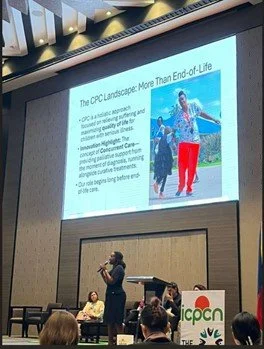
Presenting at the ICPCN conference
Beyond individual bedside encounters, the Sally Test Child Life Program is shaping the future of pediatric care in Kenya. Through regional trainings, the program equips healthcare providers with practical skills to reduce medical trauma and strengthen emotional safety for children. In 2025, 63 participants from hospitals across Kenya, along with healthcare workers from Uganda, Tanzania and Malawi, completed intensive Child Life training designed to embed psychosocial care into routine practice.
This systems-level impact has been fueled by strategic partnerships and innovation. Collaborations with global institutions such as Princess Maxima Centre, InvinciKids, Child’s Play Charity and Foundation S My Child Matters Grant have supported virtual reality studies to reduce procedural pain and international palliative care initiatives aimed at improving end-of-life support. These advances ensure that care delivered in Kenyan hospitals reflects global best practices while remaining deeply rooted in local realities.
At the heart of every success is donor support. Philanthropic partners have made it possible to train Child Life Specialists, expand services into new clinics, and create spaces where children can simply be children, even while hospitalized. Donor funding supports everything from caregiver education sessions to holiday celebrations that bring joy to the MTRH wards. This year 801 children in 25 different sections of the hospital were gifted with a bag containing toothpaste, toothbrush, soap, sunglasses, watch, lollipop, balloon, milk and a cupcake.
An Association of Child Life Professionals Disney World Grant will enhance the main playroom to a higher standard for better child engagement. “Our donors are part of every story we touch,” Kabuthi said. “They may never meet the children whose lives they change, but their generosity shows up in moments of comfort, courage and healing every single day.”
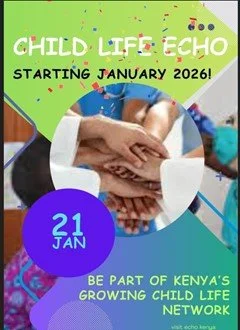
As the program looks ahead, plans include expanding mentorship through a national Child Life ECHO platform and strengthening professional pathways to ensure sustainability. Each step forward is guided by a belief that emotional care is not optional, but essential.
For sick and injured children that belief can mean the difference between fear and trust. In a hospital room filled with uncertainty, a moment of play, understanding or compassion can change everything. Through the Sally Test Child Life Program, those moments are becoming part of standard care, thanks to the enduring commitment of donors who believe that healing should reach the heart as well as the body.